• About Us
    • What Is Street Harassment?
    • Why Stopping Street Harassment Matters
    • Meet the Team
      • Board of Directors
      • Past Board Members
    • In The Media
  • Our Work
    • National Street Harassment Report
    • International Anti-Street Harassment Week
    • Books
    • Blog Correspondents
      • Past SSH Correspondents
    • Safe Public Spaces Mentoring Program
    • Campaigns against Companies
    • Washington, D.C. Activism
  • Our Books
  • Donate
  • Store

Stop Street Harassment

Share your street harassment story

  • 
  • 
  • 
  • 
  • 
  • 
  • Home
  • Blog
    • Harassment Stories
    • Blog Correspondents
    • Street Respect Stories
  • Dealing With Harassers
    • Dealing With Harassers
    • What to Do Before or After Harassment
    • Street Harassment and the Law
    • Taking Community Action
  • Resources
    • Definitions
    • Statistics
    • Articles & Books
    • Anti-Harassment Groups & Campaigns
    • Male Allies
      • Educating Boys & Men
      • How to Talk to Women
      • Bystander Tips
    • Video Clips
    • Images & Flyers
  • Take Action
  • Contact
You are here: Home / Resources / Statistics

Statistics

Street harassment is an under-researched topic, but it’s clear from the few studies that exist that it is a significant and prevalent problem.

In 2014, SSH commissioned a 2,000-person national survey in the USA with surveying firm GfK. The survey found that 65% of all women had experienced street harassment. Among all women, 23%  had been sexually touched, 20% had been followed, and 9% had been forced to do something sexual. Among men, 25% had been street harassed (a higher percentage of LGBT-identified men than heterosexual men reported this) and their most common form of harassment was homophobic or transphobic slurs (9%). Read more findings.


More studies about the street harassment of women and female-identified individuals:

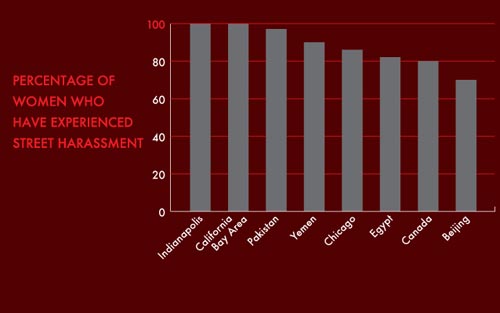
1 — Forty Academic & Community Studies

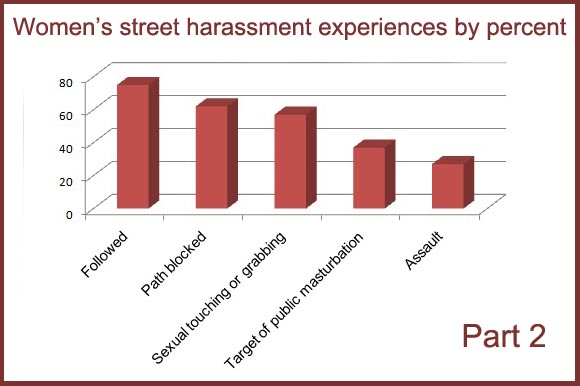
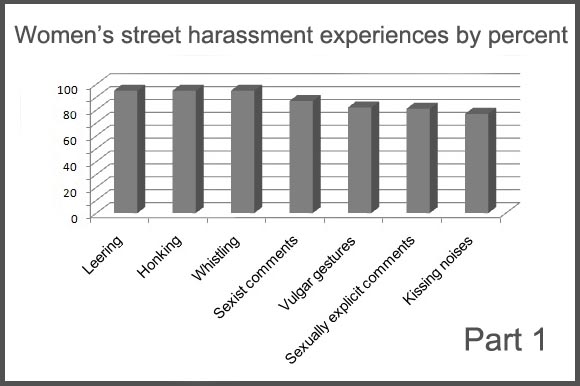
2 —- Two Online Studies by Stop Street Harassment

In one of the surveys of 811 women, 99 percent experienced street harassment, including:
More studies about the street harassment of LGBQT individuals:

* According to a report by the Center for American Progress, LGBT individuals report high rates of discrimination in public spaces, so did gay New York residents who took a 2001 survey.

* Transgender individuals face particularly high rates of public discrimination according to a report by the National Gay and Lesbian Task Force (NGLTF) and the National Center for Transgender Equality (NCTE).

* 2013 study of 93,000 LGBQT individuals in the European Union found that half avoided public spaces sometimes because of street harassment and most reported high levels of fear in locations like restaurants, public transportation, streets, parking lots, and parks.

* When Patrick Ryne McNeil surveyed 331 gay and bisexual men around the world about their experience with street harassment for his master’s thesis in 2012, about 90 percent said they are sometimes, often, or always harassed or made to feel unwelcome in public spaces because of their perceived sexual orientation.

Post to Twitter

Share

Share Your Story

Share your street harassment story for the blog. Donate Now

From the Blog

  • Day 2: International Anti-Street Harassment Week
  • 300 Afghan Students, Teachers Speak out Against Street Harassment
  • Day 1: International Anti-Street Harassment Week
  • Man in his 40s Harasses 9- and 11-Year-Old Girls
  • Men Grope Sled Dog Musher in Alaska During a Competition

Buy the Book

Resources Pages

  • Resources
    • Definitions
    • Statistics – Academic and Community Studies
    • Statistics – Stop Street Harassment Studies
    • Articles & Books
    • Images & Flyers
    • Anti-Harassment Groups & Campaigns
    • Video Clips
  • Contact
  • Events
  • Join Us
  • Donate
  • 
  • 
  • 
  • 
  • 
  • 

Copyright © 2016 Stop Street Harassment · Website Design by Sarah Marie Lacy